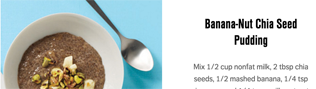
Chia Seed and Banana Pudding

Nutrition Snapshot

  • Each jar carries about as much fiber as a serving of beans, nearly all of it from the chia.
  • The seeds also bring plant protein, calcium, magnesium, and omega-3 in its plant form.
  • Two ripe bananas put real sugar in each jar, so use one banana if you are watching blood sugar.

Chia seeds thicken milk into pudding without heat, eggs, or starch. Mash two bananas into the milk, stir in the seeds with vanilla and cinnamon, and cover the jars. The seeds take up the liquid while the jars chill. What you spoon out in the morning is thick, cold, and faintly sweet.

Chia Seeds Set the Pudding Because Their Fiber Holds Water

Each chia seed has an outer coat that releases a soluble fiber called mucilage as soon as it meets liquid. The seed swells to several times its dry size and holds the liquid around it in a soft gel. That gel is what turns milk into pudding, with no cooking and no thickener.

Four hours in the refrigerator sets the jars, and a night gives the firmest texture. Ten minutes of hands-on work makes four of them. The gel keeps tightening as it sits, which is why a jar on day three is stiffer than a jar on day one.

Most of Chia’s Fiber Adds Bulk, and the Rest Feeds Your Gut Bacteria

Most of the fiber in chia is the insoluble kind. It passes through unchanged, holds water, and adds the bulk that moves waste through the colon faster. That is the part of a chia habit you notice in a week.

The smaller soluble share is the mucilage that formed the gel. Your colon bacteria ferment it and produce short-chain fatty acids, including butyrate, the preferred fuel for the cells lining the colon wall. Different fibers yield different amounts of butyrate, so eat several fiber sources across a week rather than only chia.

What’s in a Serving

Most of what a jar delivers comes from the seeds. Chia brings plant protein, calcium, magnesium, and omega-3 in its plant form, alpha-linolenic acid. The body converts a small share of that into the forms found in fish, so chia adds to your omega-3 intake rather than replacing seafood.

The milk adds protein and calcium. The banana brings potassium and all of the sweetness. A banana with brown spots tastes sweeter because ripening turns its starch into sugar, and that sugar reaches the blood faster than the starch would have. The card below shows the calculated figures for one jar.

What to Buy

Chia Seeds

Black and white chia are the same seed in two colors, with the same fiber and the same fat. Buy whole seeds for this recipe. Ground chia thickens the milk into a smooth paste instead of the soft beads that make this a pudding. Chia keeps a year or more in a cool, dark cupboard, and the refrigerator or the freezer stretches that once the bag is open.

Swallowing dry chia and then drinking is the one real hazard with these seeds, since dry seeds swell into a plug that can lodge in the esophagus. Anyone who has trouble swallowing should take extra care. Hydrating the seeds in the jar and letting them sit removes the problem.

Bananas

Use bananas that are yellow with a few brown spots. A greener banana mashes into lumps and tastes starchy. A very dark banana is sweeter and softer, and it blends into the milk almost completely.

Milk

Whole milk gives the pudding a richer texture and adds fat. Fat slows how fast the stomach empties, so the sugar from the banana reaches the blood more gradually. Unsweetened almond or soy milk works in the same amount. Read the label for added sugar, since many flavored cartons carry several teaspoons a cup.

Who This Fits and Who Goes Easy

This pudding suits anyone building a gut-friendly eating pattern, and it is an easy way to get a real amount of fiber into breakfast. It works as a make-ahead breakfast, an afternoon snack, or a light dessert. Anyone with a narrowing in the digestive tract, or a history of bowel obstruction, should get clearance from the clinician managing it before adding chia.

If your usual fiber intake is low, start with half a jar and build up over a week or two, drinking more water through the day. A sudden jump in fiber causes gas and cramping for many people. If you have irritable bowel syndrome, the insoluble fiber here is the part that can aggravate symptoms, so start at a quarter jar and hold there for a week.

How to Make It Your Own

A tablespoon of cocoa powder, half a teaspoon of ground ginger, or a spoonful of peanut butter each change the flavor without changing the texture. Berries stirred in after the chill add more fiber. Sliced banana and chopped walnuts on top give the jar some crunch.

The swaps that change the nutrition:

  • Dairy free: use unsweetened almond or soy milk in the same amount. Almond milk lowers the protein in a jar, and soy milk keeps it close to dairy.
  • More protein: whisk a quarter cup of plain Greek yogurt into each jar before it chills.
  • Lower sugar: use one banana in place of two, and add another half teaspoon of vanilla.
  • Nut free and low sodium: the recipe is both as written, so skip the peanut butter and the walnuts if nuts are the issue.

Storage, Make-Ahead, and Serving Ideas

The pudding keeps three to four days covered in the refrigerator. Stir in a tablespoon of milk before serving a jar that has stiffened. Make four jars on Sunday and you have breakfast through Wednesday.

Freezing is a poor option here, since the gel separates and releases water as it thaws. Serve the pudding cold, straight from the jar. It also layers with berries in a glass if you want to put it in front of guests.

Chia seeds and mashed banana set into a thick, creamy pudding with no added sugar. Ten minutes of hands-on work makes four make-ahead breakfasts.
Course Breakfast
Keyword banana chia pudding, chia pudding, high fiber breakfast, make ahead breakfast, no added sugar pudding
Prep Time 10 minutes
Total Time 10 minutes
Servings 4 servings
Calories 232kcal

Equipment

  • Mixing bowl
  • Whisk
  • Storage Jars

Ingredients

  • 1/2 cup chia seeds
  • 2 cups milk whole
  • 2 bananas ripe, mashed
  • 1 teaspoon vanilla extract
  • 1/4 teaspoon cinnamon ground

Instructions

  • Mash the bananas in a mixing bowl until almost smooth.
  • Pour the milk over the mashed banana.
  • Add the vanilla extract.
  • Add the cinnamon.
  • Whisk until the banana is blended into the milk.
  • Add the chia seeds.
  • Whisk for 30 seconds, until the seeds are suspended through the liquid.
  • Let the mixture stand for 10 minutes.
  • Whisk again to break up any clumps of seeds.
  • Divide the mixture among four jars or bowls.
  • Cover each jar.
  • Refrigerate for at least 4 hours, or overnight.
  • Stir in a tablespoon of milk before serving if the pudding is firmer than you want.

Notes

Serving size is one jar, about 1 cup.
The 10 minute rest before dividing and the 4 hour chill are both passive time and sit outside the total time. Overnight gives the firmest texture.
Swallowing dry chia and then drinking is the one real hazard with these seeds, since dry seeds swell into a plug that can lodge in the esophagus. Hydrate the seeds in the jar and let them sit. Anyone who has trouble swallowing should take extra care.
Buy whole chia seeds for this recipe. Ground chia thickens the milk into a smooth paste instead of the soft beads that make this a pudding. Black and white chia are the same seed with the same fiber and the same fat. Chia keeps a year or more in a cool, dark cupboard, and the refrigerator or the freezer stretches that once the bag is open.
Use bananas that are yellow with a few brown spots. A greener banana mashes into lumps and tastes starchy.
Dairy free: use unsweetened almond or soy milk in the same amount. Almond milk lowers the protein in a jar, and soy milk keeps it close to dairy.
Lower sugar: use one banana in place of two, and add another half teaspoon of vanilla.
More protein: whisk a quarter cup of plain Greek yogurt into each jar before it chills.
Nut free and low sodium: the recipe is both as written, so skip the peanut butter and walnut toppings if nuts are the issue.
Storage: keeps 3 to 4 days covered in the refrigerator, and the gel tightens a little each day. Stir in a tablespoon of milk before serving a jar that has stiffened. Freezing is a poor option, since the gel separates and releases water as it thaws.
If your usual fiber intake is low, start with half a jar and build up over a week or two, drinking more water through the day. If you have irritable bowel syndrome, start at a quarter jar and hold there for a week.

Nutrition

Calories: 232kcal | Carbohydrates: 28g | Protein: 8g | Fat: 11g | Saturated Fat: 3g | Sodium: 50mg | Potassium: 483mg | Fiber: 9g | Sugar: 13g | Calcium: 288mg | Iron: 2mg | Magnesium: 102mg | Phosphorus: 319mg | Choline: 28mg

Chia Turns Milk and Two Bananas Into a Breakfast With Real Fiber

A jar of this pudding gives you a large amount of fiber, most of it the insoluble kind that adds bulk and a smaller share your gut bacteria ferment. It also brings plant protein and the plant form of omega-3. Ten minutes on a Sunday puts four jars in the refrigerator. Keep the portion to one jar, and add fruit on top when you want it sweeter.

Serve It With

A slice of Cinnamon Avocado Quick Bread for a Tender, Butter-Free Loaf next to a jar makes a breakfast with fiber and healthy fat. For another make-ahead snack built on fiber, try Crispy Roasted Chickpeas with Smoked Paprika and Garlic. For more on how soluble and insoluble fiber work, see Fiber 101: Gut Health, Weight Management, Cholesterol, and More.

About the Author

Stephanie Figon, MS, RDN, LD

Creator of Supplement Sciences and NutriScape.NET. As a dietitian since 1992, Steph has had experiences in consulting, 15 years in clinical, and has operated a private practice nutrition counseling office for since 2011. Log in to comment and save this article on your board or send your comments to reviews@supplement-sciences.com

Tags: , ,

Related Posts