Nutrition Snapshot
- The alfredo sauce here is built on low-fat milk and olive oil, so it fits a heart-healthy eating pattern.
- Between the chicken, the ricotta, and the parmesan, two roll ups hold enough protein for a full dinner.
- Most of the salt in this recipe comes from the parmesan, so use half of it and add lemon and pepper.
Roll ups are lasagna without the layering. You spread filling down a cooked noodle, roll it, and stand the rolls in the dish, and each roll up is one portion. The chicken, spinach, and ricotta inside need no rethinking. The sauce does. A jarred alfredo, or a homemade one, is mostly heavy cream and butter, and that is the one part of this dish to rebuild.
Milk and Olive Oil Give the Sauce Its Body Without the Cream
A classic alfredo is heavy cream and butter, which is where nearly all of its saturated fat comes from. Saturated fat lowers the number of LDL receptors the liver puts on its surface. Those receptors are what pull LDL particles out of the blood, so fewer of them means LDL circulates longer and blood levels rise.
Replacing saturated fat with unsaturated fat is what lowers LDL, so the type of fat matters more than the total amount (Hooper et al., Cochrane Review, 2020, PMID 32428300). This sauce keeps the fat and changes its type. The creaminess comes from the protein and lactose in low-fat milk, a spoonful of flour thickens the sauce, and olive oil supplies mostly monounsaturated fat. The flavor comes from grated parmesan.
What’s in a Serving
Most of the carbohydrate comes from the noodles, and the whole wheat version brings fiber along with it. The protein comes from three places: the chicken, the ricotta, and the parmesan. Most of the fat is the olive oil and the parmesan, with a little from the part-skim ricotta.
Almost all of the sodium comes from the parmesan, since nothing else in the recipe is salted heavily. The spinach adds potassium, folate, and a little more fiber. The recipe card below shows the calculated figures for two roll ups.
Par-Cooked Noodles Roll Without Tearing
Pull the noodles two minutes before the package time says they are done. At that point the starch has taken up enough water to bend, and the strand still holds together when you spread filling on it. A fully cooked noodle tears down the middle as you roll it.
Drain them and lay them flat on parchment paper rather than leaving them in a colander, where they fuse into one sheet. They finish softening in the oven, sitting in sauce for twenty-five minutes, so they come out tender.
What to Buy
The Lasagna Noodles
The fiber in whole wheat lasagna noodles is what makes this a fuller meal, and they hold up to rolling better than thin no-boil sheets. Buy organic (to avoid glyphosate), since wheat is one of the crops often sprayed to dry the field before harvest, and organic growing does not allow it.
The Chicken
Ten ounces of cooked chicken breast is roughly two small breasts, or the meat pulled from half a rotisserie chicken. Rotisserie is the faster route and comes already salted, so taste the sauce before you add any. Leftover roasted or poached chicken works just as well, and shredded meat holds sauce better than diced.
The Parmesan and the Ricotta
Buy parmesan as a wedge and grate it yourself. Pre-grated parmesan is coated with cellulose to keep it from clumping, and that coating turns the sauce grainy. A wedge also tastes stronger, so you need less of it, which keeps the sodium down.
Part-skim ricotta binds the filling and adds protein with little saturated fat. Whole-milk ricotta is creamier and brings more saturated fat, so part-skim is the better choice here.
Who This Fits and Who Goes Easy
This fits anyone eating for heart health who misses cream sauces, and it fits anyone who wants a pasta dinner with enough protein to hold them. The chicken and the two cheeses supply that protein, and the spinach and whole wheat noodles add the fiber.
Go easy on the parmesan if you are limiting sodium, since most of the salt here comes from it. Two roll ups is a real carbohydrate portion, so anyone counting carbohydrate should plan for it the way they would plan for two slices of bread.
How to Make It Your Own
Chopped mushrooms, roasted red pepper, or steamed broccoli all stir into the filling without changing how it rolls. A pinch of red pepper flakes in the sauce balances the richness. To make the dish meatless, swap the chicken for a second cup of ricotta and a can of drained white beans.
Lower sodium: use half the parmesan, then season with extra black pepper, a grate of garlic, and a squeeze of lemon. Dairy-free: unsweetened cashew or oat milk thickens the same way, and nutritional yeast gives some of the parmesan flavor, though the result is plainer. Nut-free as written. The recipe has no added sugar, so no sweetener swap applies here.
Storage and Make-Ahead
Assemble the whole dish through the parmesan topping, cover it, and refrigerate it up to a day ahead. Bake it straight from the refrigerator and add ten minutes to the covered time. The noodles absorb a little sauce overnight, which makes the finished dish firmer and easier to lift out.
Baked roll ups keep four days refrigerated and two months frozen. Freeze them in single portions so you can reheat what you need. A flour-thickened sauce tightens as it cools, so reheat covered at 350 degrees Fahrenheit with a splash of milk stirred over the top.
Equipment
- large pot
- Saucepan
- Whisk
- 9 x 13 inch Baking Dish
Ingredients
For the roll ups
- 8 lasagna noodles whole wheat, organic
- 10 ounces chicken breast cooked and shredded
- 1 cup ricotta cheese part-skim
- 10 ounces spinach frozen chopped, thawed and squeezed dry
- 1/4 teaspoon black pepper ground
For the sauce
- 2 tablespoons olive oil
- 3 cloves garlic minced
- 2 tablespoons all-purpose flour organic
- 2 cups milk low-fat
- 3/4 cup parmesan cheese grated
- 1/4 teaspoon nutmeg ground
- 1/4 teaspoon black pepper ground
Instructions
- Heat the oven to 375 degrees Fahrenheit.
- Bring a large pot of water to a boil.
- Cook the lasagna noodles 2 minutes short of the package time, until they are just pliable.
- Drain the noodles and lay them flat on parchment paper so they do not stick together.
- Squeeze the thawed spinach dry in a clean towel.
- Warm the olive oil in a saucepan over medium heat.
- Add the garlic and cook for 30 seconds, until it smells sweet.
- Whisk in the flour and cook for 1 minute.
- Pour in the milk a splash at a time, whisking after each addition.
- Cook the sauce for 4 to 5 minutes, whisking, until it coats the back of a spoon.
- Take the pan off the heat and whisk in half of the parmesan, the nutmeg, and 1/4 teaspoon of the black pepper.
- Stir the chicken, ricotta, spinach, and the remaining black pepper together in a bowl.
- Stir 1/2 cup of the sauce into the filling.
- Spread 1/2 cup of the sauce over the bottom of a 9 by 13 inch baking dish.
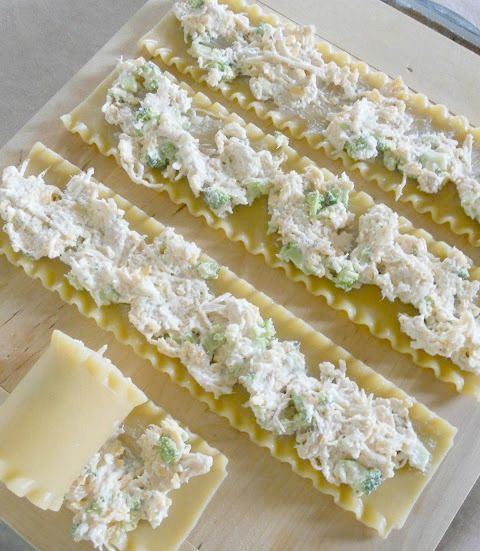
- Spread about 1/3 cup of the filling along the length of each noodle.
- Roll each noodle up from the short end and set it seam side down in the dish.
- Pour the remaining sauce over the roll ups.
- Sprinkle the rest of the parmesan over the top.
- Cover the dish with foil and bake for 20 minutes.
- Uncover and bake for 5 more minutes, until the top browns lightly.
- Let the dish rest for 5 minutes before serving.
Notes
Nutrition
Rebuilding the Sauce Is What Makes This a Heart-Healthy Pasta Night
The chicken, spinach, and ricotta inside a roll up were already fine. Moving the sauce from heavy cream and butter to low-fat milk, olive oil, and parmesan is the change that matters, and the result is still creamy. Most of the sodium comes from the parmesan, so use half of it if you are watching salt. Two roll ups with a green vegetable is dinner.
Serve It With
Two roll ups and something green is the meal. Easy Cilantro Lime Coleslaw for a Low-Sodium, Heart-Healthy Side adds crunch and almost no sodium, which matters next to a parmesan sauce. Cool Summer Squash Soup works as a light first course. For more on why the fiber in the whole wheat noodles counts, see Fiber 101: Gut Health, Weight Management, Cholesterol, and More.

Scan Me!