Tag: seafood

Avocado Shrimp Ceviche

Nutrition Snapshot

  • A serving gives about 20 grams of protein from shrimp, with only about 1 gram of saturated fat in the whole dish.
  • Diced avocado adds the same kind of fat as olive oil, plus most of the fiber in a serving.
  • A serving holds about 346 milligrams of sodium, so use a no-salt-added ketchup and cut the Worcestershire sauce.

Ceviche is what you make when it is too warm to stand at the stove. Shrimp, lime juice, tomato, onion, and cilantro go into one bowl and chill for an hour. The diced avocado goes on at the very end so it stays green. Poaching the shrimp first makes the dish safe for guests who should skip raw seafood.

Lean Shrimp and Avocado Fat Make This a Heart-Healthy Starter

Shrimp Gives Protein With Almost No Fat of Its Own

Almost all of the calories in shrimp come from protein. A serving of this ceviche has about 20 grams of it. The 5.5 grams of total fat in a serving comes mostly from the avocado, and only about 1 gram of that is saturated.

Shrimp is high in cholesterol, and that matters less than most people expect. Your liver makes most of the cholesterol in your blood, and it makes less when you eat more from food. Saturated fat has a much larger effect on LDL cholesterol, which is why shrimp fits a heart-healthy pattern.

Avocado Adds the Kind of Fat That Helps

Almost all of the fat in an avocado is the kind that stays liquid at room temperature, called monounsaturated fat. It is the same type that makes up most of the fat in olive oil. Swapping monounsaturated fat in for saturated fat lowers LDL cholesterol.

The avocado is also the biggest source of fiber here. The tomatoes and onion add the rest, for about 3 grams a serving.

Shrimp and Tomatoes Bring the Potassium

A serving has about 472 milligrams of potassium, which is more than its 346 milligrams of sodium. Potassium relaxes the muscle in the walls of your blood vessels, which lowers the pressure inside them. It also increases how much sodium the kidneys remove in the urine. Eating patterns higher in potassium than sodium are linked with lower blood pressure.

The shrimp supplies about half of the potassium here, and the tomatoes and avocado supply most of the rest. For more on this mineral and where to get it, see Potassium: Understanding This Major Mineral and Its Impact on Health.

What’s in a Serving

Most of a serving comes from the shrimp: the protein, about half the potassium, and a good share of the sodium, since shrimp contains sodium on its own. The tomatoes and onion add water, fiber, and potassium for very few calories. The avocado adds the fat and most of the fiber. The bottled sauces add flavor and the rest of the sodium.

A serving is small in calories, so you can eat a real portion of it. For how much protein you need in a day and where to get it, see Protein: How Much Do You Need And Where Do You Get It. The recipe card below lists the full nutrition figures for a serving.

What to Buy

Shrimp

Raw shrimp that is already peeled and deveined saves you the fussiest step. Frozen is usually the better buy, since most shrimp sold thawed at the fish counter was frozen first anyway. Thaw it overnight in the refrigerator or under cold running water. The shrimp gets chopped, so any size works. Buy whatever is on sale.

Limes and Cilantro

Squeeze the limes fresh. Bottled lime juice tastes flat here. Three quarters of a cup takes about six to eight limes, so buy more than you think you need. Choose limes that feel heavy for their size. Cilantro should look crisp, with green leaves and dry stem ends.

Avocado

You want one that yields to gentle pressure at the stem end. A firm avocado ripens on the counter in two or three days, faster in a paper bag with a banana. Dice it right before serving. Lime juice slows the browning, and the pieces still look best within an hour of dicing.

The Bottled Sauces

The Worcestershire sauce, ketchup, and hot sauce are where most of the added sodium comes from. A no-salt-added ketchup and a lower-sodium hot sauce both work here with little change to the flavor.

Worcestershire also contains anchovies, so leave it out for a fish allergy or a vegetarian guest. If the dish needs to be gluten-free, check the label, since some versions use malt vinegar from barley and some use a soy sauce made with wheat.

Who This Fits and Who Should Go Easy

This fits anyone eating for their heart and anyone who wants a high-protein starter that stays light. Poaching the shrimp widens who can eat it. Lime juice firms raw shrimp, and it leaves bacteria and viruses alive. Poaching kills them, so the dish is safe in pregnancy, for young children, for adults over 65, and for anyone with a weakened immune system.

Shrimp is also among the lower-mercury seafoods, which answers the other half of the pregnancy question. If you are watching sodium closely, skip the added salt, use a no-salt-added ketchup, and cut the Worcestershire sauce to a teaspoon. Shrimp is the whole dish, so a shellfish allergy means a different starter.

How to Make It Your Own

Bay scallops work in place of the shrimp. They are small, so give them about a minute. Firm white fish such as cod or halibut also works, poached and flaked. Diced cucumber, jicama, or mango add crunch and sweetness. A minced serrano gives you more heat than the bottled sauce does. Leaving out the Worcestershire and ketchup gives you a cleaner, more traditional lime and cilantro ceviche.

Swaps Recap

  • Lower sodium: leave out the added salt, use a no-salt-added ketchup, and cut the Worcestershire sauce to 1 teaspoon.
  • Lower sugar: ketchup is the only source of added sugar here, so a no-sugar-added ketchup removes it.
  • Fish-free: leave out the Worcestershire sauce, which contains anchovies, and add another squeeze of lime instead.
  • Dairy-free: the recipe is dairy-free as written.
  • Nut-free: the recipe is nut-free as written.
  • Gluten-free: check the Worcestershire label, and scoop with corn tostadas or gluten-free crackers.

Storage, Make-Ahead, and Serving

The shrimp mixture can be made a day ahead and kept covered in the refrigerator. The shrimp gets slightly firmer as it sits in the lime juice, so the texture changes a little overnight. Hold the avocado and the green onion until you serve, then stir the avocado in gently so the pieces stay whole.

Leftovers keep two days in the refrigerator. Freezing turns the shrimp rubbery and the tomatoes watery, so plan to finish it. Serve it cold in glasses or small bowls, with whole grain crackers, corn tostadas, or endive leaves for scooping.

Print Recipe
No ratings yet

Avocado Shrimp Ceviche

Poached shrimp chilled in fresh lime juice with tomatoes, onion, and cilantro, then topped with diced avocado. A light, high-protein starter you make ahead.
Prep Time20 minutes
Cook Time5 minutes
Total Time25 minutes
Course: Appetizer
Keyword: avocado shrimp ceviche, heart healthy appetizer, high protein appetizer, make ahead appetizer, shrimp ceviche
Servings: 8 servings
Calories: 166kcal

Equipment

  • large pot
  • Colander
  • Mixing bowl

Ingredients

  • 2 pounds shrimp large, raw, peeled, deveined, and chopped
  • 3/4 cup lime juice fresh
  • 5 tomatoes roma, diced
  • 1 onion white, medium, chopped
  • 1/2 cup cilantro fresh, chopped
  • 1 tablespoon Worcestershire sauce
  • 1 tablespoon ketchup
  • 1 teaspoon hot pepper sauce
  • black pepper ground, to taste
  • salt to taste, optional
  • 1 avocado peeled, pitted, and diced
  • 2 tablespoons green onion chopped, for garnish

Instructions

  • Bring a large pot of water to a boil.
  • Add the shrimp and cook for 2 to 3 minutes, until they turn pink and opaque all the way through.
  • Drain the shrimp and move them straight into a bowl of ice water to stop the cooking.
  • Drain again, pat the shrimp dry, and chop them into bite-size pieces.
  • Put the chopped shrimp in a large bowl and pour the lime juice over them.
  • Stir until every piece is coated.
  • Add the tomatoes, onion, and cilantro, and stir until they are coated with the lime juice.
  • Cover the bowl and refrigerate for 1 hour.
  • Stir in the Worcestershire sauce, ketchup, and hot pepper sauce.
  • Season with black pepper, and with salt only if you want it.
  • Spoon the ceviche into glasses or small bowls.
  • Top each serving with the diced avocado and the chopped green onion.

Notes

METHOD CHANGE FROM THE ORIGINAL CARD: the shrimp is now cooked for 2 to 3 minutes and chilled before it meets the lime juice. Lime juice firms raw shrimp, and it leaves bacteria and viruses alive, so a 5-minute acid soak is a raw-seafood preparation. Cooking the shrimp gives a firmer bite and makes the dish safe in pregnancy, for young children, for adults over 65, and for anyone with a weakened immune system. Every ingredient and amount is unchanged.
Passive time: 1 hour of chilling in the refrigerator after the vegetables go in. This is on top of the 25 minutes of active time.
Lower sodium: leave out the added salt, use a no-salt-added ketchup, and cut the Worcestershire sauce to 1 teaspoon. Shrimp contains sodium on its own, so the seasonings are where you have room to work.
Lower sugar: ketchup is the only source of added sugar in the recipe. A no-sugar-added ketchup removes it.
Fish allergy and vegetarian guests: Worcestershire sauce contains anchovies. Leave it out and add another squeeze of lime instead.
Gluten: check the Worcestershire sauce label. Some versions use malt vinegar from barley and some use a soy sauce made with wheat. Serve with corn tostadas or gluten-free crackers rather than whole grain crackers if the dish needs to be gluten-free.
Hot sauce: leave it out of the bowl and set it on the table so each person adds their own.
Avocado: dice it and stir it in just before serving so the pieces stay green and whole.
Presentation: save two whole cooked shrimp and hook them over the rim of each glass.
Serving: serve cold with whole grain crackers, corn tostadas, or endive leaves for scooping. Set out extra lime wedges, Worcestershire sauce, ketchup, and hot sauce so people can season their own.
Make ahead and storage: the shrimp mixture can be made a day ahead and kept covered in the refrigerator. The shrimp gets slightly firmer as it sits in the lime juice, so the texture changes a little overnight. Leftovers keep 2 days refrigerated. Do not freeze it; freezing turns the shrimp rubbery and the tomatoes watery.
Dairy-free and nut-free as written.
Serving size: about 1/2 cup per serving, 8 servings.
Nutrition is calculated by WP Recipe Maker. Re-run the calculation after import.

Nutrition

Calories: 166kcal | Carbohydrates: 9g | Protein: 24g | Fat: 4g | Saturated Fat: 1g | Sodium: 200mg | Potassium: 682mg | Fiber: 3g | Sugar: 4g | Calcium: 94mg | Iron: 1mg | Magnesium: 60mg | Phosphorus: 284mg | Choline: 11mg

Poaching the Shrimp Widens Who Can Eat This Cold Starter

Two or three minutes in boiling water is the whole difference. The shrimp is cooked, so you can serve this to a pregnant guest or a grandparent. The lime still gives it the flavor. What you get is a cold starter with about 20 grams of protein and about 1 gram of saturated fat. Serve it in small glasses, about half a cup each, with corn tostadas for scooping.

Serve It With

Ceviche is cold and acidic, so it pairs well with something crunchy and something green. Easy Cilantro Lime Coleslaw repeats the lime and cilantro and adds cabbage crunch. A Jicama and Carrot Salad uses the jicama from the variations above. An Easy Kale Salad turns either pairing into a light summer supper.
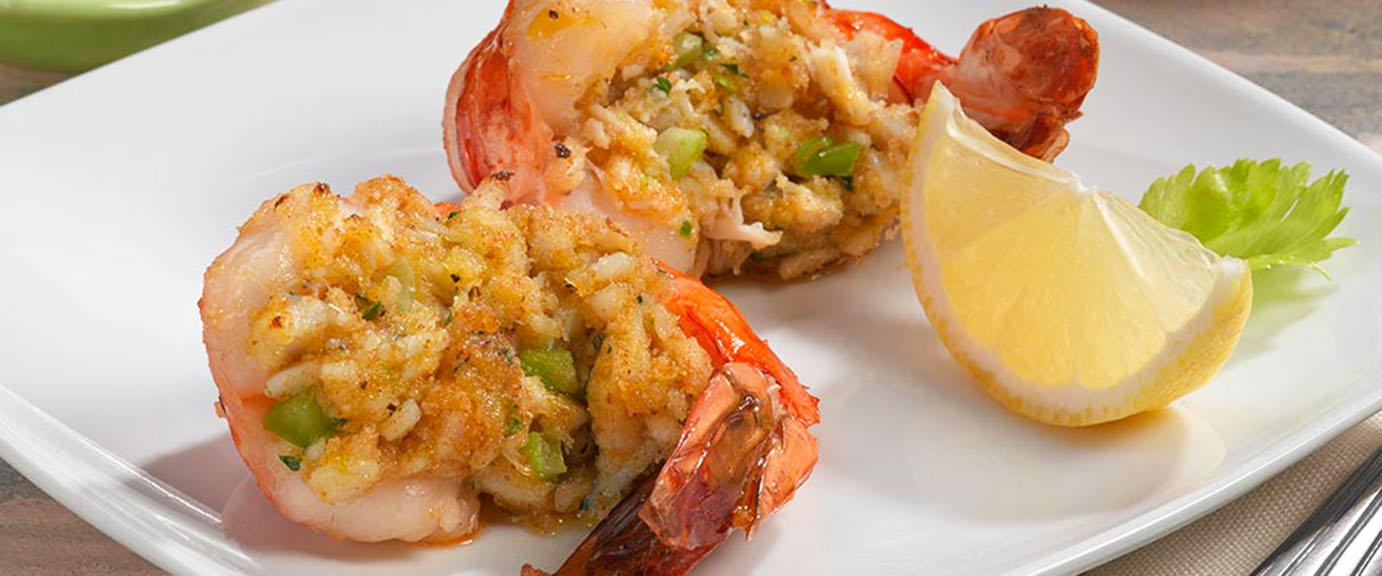

Crab-Stuffed Shrimp

Nutrition Snapshot

  • Three stuffed shrimp give you about 27 grams of protein and six grams of carbohydrate.
  • Shrimp and crab supply vitamin B12 and iodine, which are easy to fall short of without seafood.
  • About half the calories come from butter, so keep the brush coat thin or use two tablespoons in total.

Crab-stuffed shrimp bake in about ten minutes and put an entree’s worth of protein at the front of the meal. Three of them give you roughly the protein in three ounces of chicken breast, with six grams of carbohydrate alongside it. They also look like restaurant food on the plate, which is a fair return for about twenty-five minutes of prep.

Protein First and Six Grams of Carbohydrate Make for a Gentle Start

Blood sugar rises in response to carbohydrate. A serving of these shrimp holds six grams of it, most of that from the quarter cup of bread crumbs spread across twelve shrimp. Protein and fat slow the rate at which the stomach empties. Glucose then reaches the bloodstream more slowly.

The order of a meal matters too. Starting with protein instead of the bread basket keeps the opening of a meal low in carbohydrate, which leaves less to raise blood sugar early on. That habit is useful at a long dinner, where the appetizer often adds the most carbohydrate of anything before the entree.

What’s in a Serving

A serving is three stuffed shrimp. Nearly all of the protein comes from the shrimp themselves and the crab in the filling, both lean to start with. A little over half the fat is butter, two tablespoons of it in the filling and the rest brushed on before baking. The shrimp and crab supply what is left.

Sodium comes from three places: the crab meat, which is packed or pasteurized with salt, the bread crumbs, and the shrimp. Most frozen shrimp is treated with a salt or phosphate solution before freezing. The recipe card below shows the exact figures.

What to Buy: Shrimp, Crab, and Bread Crumbs

Raw Jumbo Shrimp, Peeled With Tails On

Look for raw shrimp sold at 16 to 20 per pound, labeled jumbo or extra jumbo depending on the store. That size leaves room to cut a pocket deep enough to hold the filling. Buy them peeled with the tails left on as a handle, or peel them yourself and leave the last segment in place.

Check the bag for a single ingredient. Shrimp treated with salt or phosphate holds extra water and extra sodium, which is a real difference in a dish that already sits near 400 milligrams a serving.

Crab Meat With Real Crab Flavor

Pasteurized lump crab in a tub, sold near the seafood counter, has the best texture for a filling. Canned crab costs less and works fine here. Drain it well and press out the liquid so the filling holds its shape in the shrimp. Imitation crab is made from processed fish with added starch and sugar, which changes both the flavor and the carbohydrate count.

Organic Bread Crumbs

Buy organic bread crumbs (to avoid glyphosate), since wheat is one of the crops often sprayed to dry the field before harvest, and organic growing does not allow it. Plain dry crumbs suit this filling best. Panko is coarser and drier, so use a little less of it and add a spoonful of the melted butter.

Who This Fits and Who Should Go Easy

Who It Fits

This suits anyone building meals around protein: a low-carbohydrate eating pattern, a blood sugar plan, or a night when the main course is already starchy. It also works when you want something small and filling before a late dinner.

Go Easy If

Go easy if you have a shellfish allergy, since shrimp and crab are two of the most common triggers. Shellfish is high in purines, which matters if you have gout. Three shrimp deliver close to 400 milligrams of sodium, so use the lower-sodium swaps below if you are working to a strict target.

How to Make It Your Own

The filling takes seasoning well, so treat the base as a starting point. A pinch of cayenne or a chopped scallion belongs here. A half teaspoon of Old Bay works too, though it adds noticeable salt to a dish that already has some.

The Health Swaps in Short

  • Lower sodium: rinse and drain the crab meat, use unsalted or homemade bread crumbs, and season with extra lemon and black pepper.
  • Lower sugar: the recipe uses no added sugar, so it already fits a lower-sugar plan.
  • Dairy-free: use olive oil in place of the butter, in the filling and for brushing.
  • Gluten-free: swap in gluten-free bread crumbs or almond flour, measure for measure.
  • Nut-free: keep to the gluten-free crumbs rather than the almond flour.
  • Lighter: use two tablespoons of butter in total, keeping the brush coat thin or leaving it off.

To turn the appetizer into dinner, plan on six shrimp a person over a green salad or a scoop of cauliflower rice.

Storage, Make-Ahead, and Serving

Stuff the shrimp up to a day ahead, cover the tray, and refrigerate. Bake them straight from cold and add a minute or two to the time. The filling itself keeps two days in a covered container, which makes this a reasonable dish to prep the morning of a party.

Cooked shrimp reheat poorly, since a second round of heat turns them rubbery. Bake only what you plan to serve and leave the rest stuffed and raw. Any that do get cooked are good cold the next day, sliced over a salad.

Print Recipe
No ratings yet

Crab-Stuffed Shrimp

Jumbo shrimp baked with a crab and bread crumb filling. A high-protein appetizer with six grams of carbohydrate a serving.
Prep Time25 minutes
Cook Time12 minutes
Total Time37 minutes
Course: Appetizer
Keyword: crab stuffed shrimp, high protein appetizer, low carb appetizer, make ahead, seafood appetizer
Servings: 4 servings
Calories: 164kcal

Equipment

  • baking sheet
  • Mixing bowl
  • Paring Knife
  • Pastry Brush

Ingredients

  • 6 ounces crab meat drained and finely chopped
  • 1/4 cup bread crumbs dry, organic
  • 3 tablespoons butter unsalted, melted, divided
  • 1 teaspoon celery minced
  • 1 teaspoon parsley chopped
  • 1 teaspoon onion minced
  • 1 teaspoon bell pepper green, minced
  • 1/4 teaspoon lemon juice
  • 1/8 teaspoon hot sauce about 3 drops
  • 1/8 teaspoon garlic powder
  • 1/8 teaspoon black pepper
  • 12 shrimp jumbo, raw, peeled with tails on

Instructions

  • Preheat the oven to 450 degrees F.
  • Spray a baking sheet with non-stick cooking spray.
  • Finely chop the crab meat, celery, parsley, onion, and bell pepper.
  • Combine the crab, bread crumbs, celery, parsley, onion, bell pepper, lemon juice, hot sauce, garlic powder, and black pepper in a bowl.
  • Stir 2 tablespoons of the melted butter into the crab mixture, then set it aside and reserve the rest of the butter for brushing.
  • Wash and devein the shrimp, then pat them dry.
  • Cut a 1/2 inch deep pocket along the inner curve of each shrimp, running from the tail down the center and leaving 1/2 inch at the end, without cutting through the back.
  • Widen each pocket with a finger.
  • Mold about 2 tablespoons of the crab mixture into each pocket, dividing the mixture among the 12 shrimp.
  • Arrange the stuffed shrimp on the prepared baking sheet.
  • Brush the shrimp with the reserved melted butter.
  • Bake 10 to 12 minutes, until the shrimp are opaque. Do not overcook.

Notes

Serving: one serving is 3 stuffed shrimp.
Bread crumbs: look for organic bread crumbs. Wheat is often treated with glyphosate before harvest, and organic wheat is grown without it.
Shrimp: check the bag for a single ingredient. Shrimp treated with salt or phosphate holds extra water and extra sodium.
Crab: pasteurized lump crab in a tub has the best texture. Canned crab works, so drain it well and press out the liquid.
Lower sodium: rinse and drain the crab meat, use unsalted or homemade bread crumbs, and season with extra lemon juice and black pepper.
Lower sugar: the recipe has no added sugar, so nothing changes.
Dairy-free: use olive oil in place of the butter, in the filling and for brushing.
Gluten-free: use gluten-free bread crumbs, or almond flour measure for measure.
Nut-free: keep to the gluten-free crumbs rather than the almond flour.
Lighter: use 2 tablespoons of butter in total and keep the brush coat thin. Olive oil changes the kind of fat rather than the amount, so cut the butter itself.
Make ahead: stuff the shrimp up to a day ahead, cover the tray, and refrigerate. Bake straight from cold and add a minute or two. The filling alone keeps 2 days covered.
Storage: cooked shrimp turn rubbery on reheating. Bake only what you will serve, keep the rest stuffed and raw, and eat any leftovers cold over a salad.
Serving idea: a side of melted unsalted butter is optional and adds fat, so leave it off if you are watching that. Six shrimp over a green salad makes it dinner.

Nutrition

Calories: 164kcal | Carbohydrates: 5g | Protein: 15g | Fat: 9g | Saturated Fat: 6g | Sodium: 513mg | Potassium: 191mg | Fiber: 0.4g | Sugar: 1g | Calcium: 55mg | Iron: 1mg | Magnesium: 35mg | Phosphorus: 172mg | Choline: 3mg

Crab-Stuffed Shrimp Put the Protein at the Start of the Meal

Three of these give you the protein of a small entree with very little carbohydrate, which is what makes them a steady way to open a meal. The butter is real. Swapping in olive oil changes the kind of fat rather than the amount, so use two tablespoons of butter in total when you want the dish lighter. Three shrimp is an appetizer; six with a salad is dinner.

Serve It With

A bright green vegetable balances the butter. Quick Skillet Asparagus With Garlic and Red Wine Vinaigrette cooks while the shrimp bake, and Easy Cilantro Lime Coleslaw can be made hours ahead. For your daily protein target, see Protein: How Much Do You Need And Where Do You Get It.