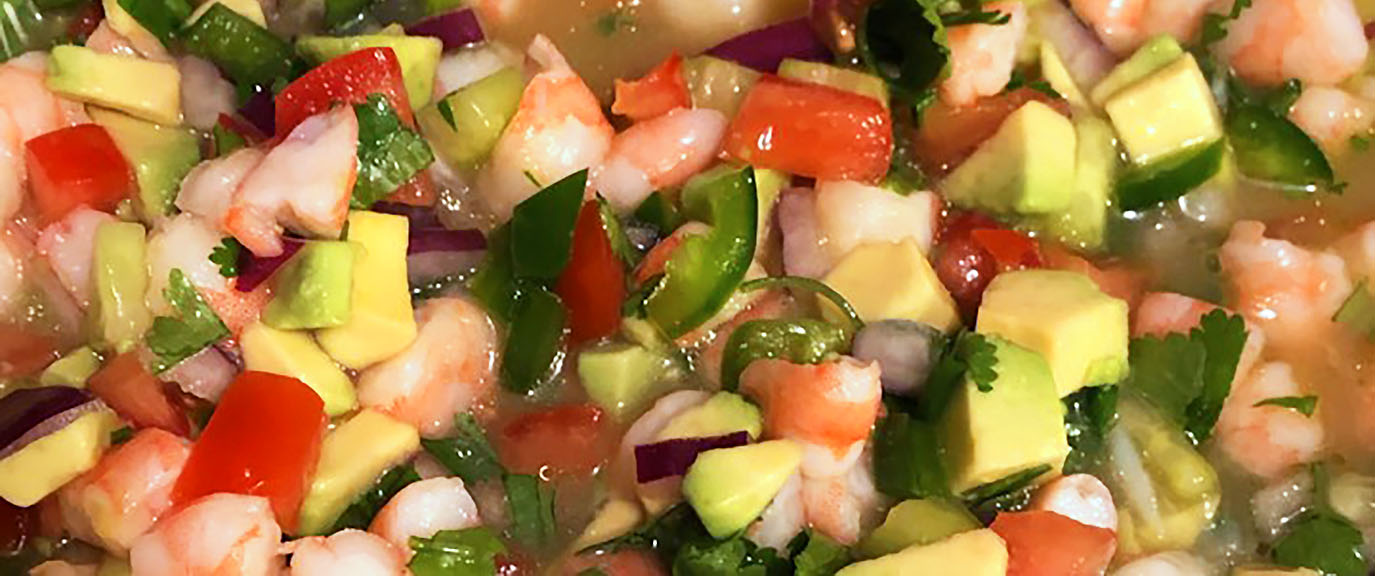
Avocado Shrimp Ceviche
Ceviche is a quick and delightfully delicious way to "cook" shrimp. Attractive to look at and scrumptious to eat!
Prep Time1 hour hr 30 minutes mins
Total Time1 hour hr 30 minutes mins
Course: Appetizer, Main Course
Servings: 8
Calories: 176kcal
- 2 lbs large shrimp – peeled, deveined and chopped
- 3/4 cup fresh lime juice
- 5 roma (plum) tomatoes, diced
- 1 white onion, chopped
- 1/2 cup chopped fresh cilantro
- 1 tbsp Worcestershire sauce
- 1 tbsp ketchup
- 1 tsp hot pepper sauce
- salt and pepper to taste
- 1 avocado – peeled, pitted and diced
- chopped green onion for garnish if desired
Place the shrimp and lime juice into a large bowl, and stir to coat. Let stand for about 5 minutes, or until shrimp are opaque. The lime juice will cook them. Mix in the tomatoes, onion, and cilantro until coated with lime juice; cover and refrigerate for 1 hour.
Remove from the refrigerator, and mix in the Worcestershire sauce, ketchup, hot sauce, salt and pepper. You can leave the hot sauce out and let people add their own when serving if that is preferred.
Serve in glass tumblers and top with avocado pieces and green onion. Set out extra Worcestershire sauce, ketchup, lime wedges and hot sauce for people to individualize their dish. Serve with whole grain crackers.
Note:
- You can save a couple of whole shrimps to dangle on the edge of the tumbler for a special presentation. The lime and the cilantro are the key, and of course fresh shrimp.
Calories: 176kcal | Carbohydrates: 12g | Protein: 20g | Fat: 5.5g | Saturated Fat: 1g | Cholesterol: 173mg | Sodium: 346mg | Potassium: 472mg | Fiber: 3g | Calcium: 57mg | Iron: 4mg
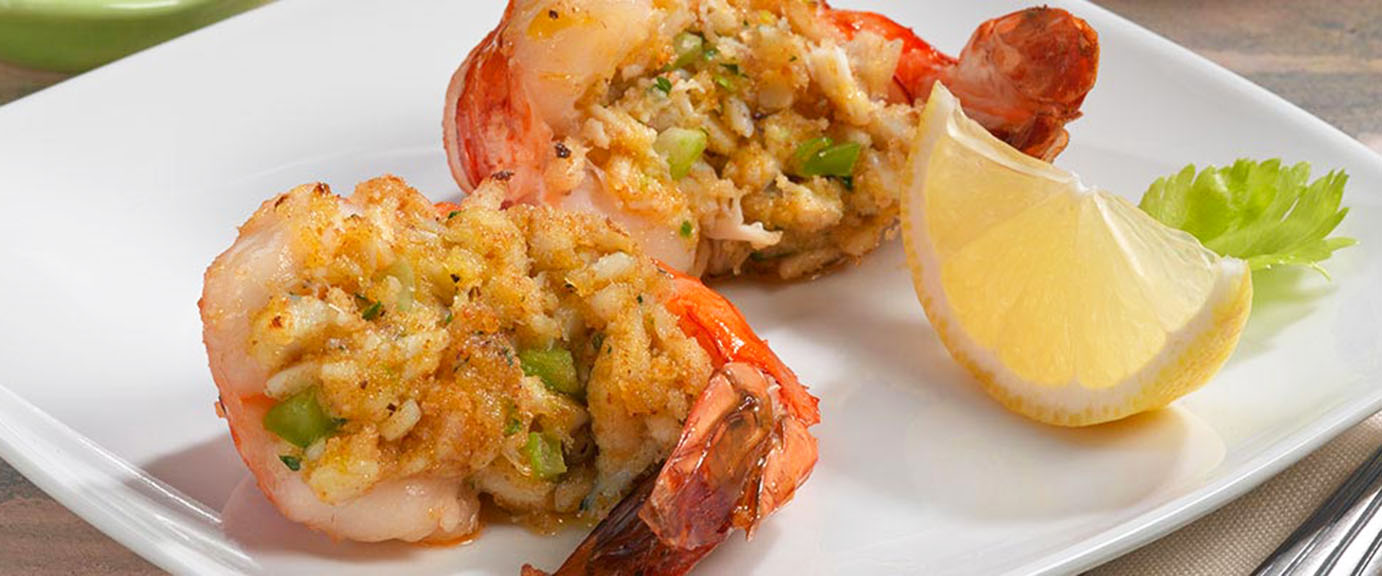
Shrimp Stuffed with Crab
Course: Appetizer, Main Course
Servings: 4
Calories: 267kcal
- 6 oz crab meat
- 1/4 cup dry bread crumbs
- 3 tbsp unsalted butter
- 1 tsp celery
- 1 tsp parsley
- 1 tsp onion
- 1 tsp green bell pepper
- 1/4 tsp lemon juice
- 3 drops hot sauce
- 1/8 tsp garlic powder
- 1/8 tsp black pepper
- 12 jumbo shrimp, raw, shelled with tails on
Preheat oven to 450° F.
Finely chop crab meat, celery, parsley, onion, and bell pepper.
In a bowl mix crab, bread crumbs, 3 tablespoons melted butter, celery, parsley, onion and bell pepper; set aside.
Spray a baking sheet with non-stick cooking spray.
Wash, devein shrimp and pat dry.
Use a sharp knife to cut a 1/2" deep pocket in inner curved side of shrimp from tail along center, leaving 1/2" at end. Do not cut through back of shrimp. Use finger to widen pocket.
Use about 2-1/2 tablespoons crab mixture per shrimp. Place portion in hand and squeeze to mold. Place crab in shrimp pocket and distribute to fill. Place shrimp on baking sheet. Repeat, preparing all shrimp.
Brush shrimp with melted butter. Bake for 10-12 minutes. Do not over cook. Serve with a side dish of melted unsalted butter if desired.
Serving: 3shrimp | Calories: 267kcal | Carbohydrates: 6g | Protein: 27g | Fat: 15g | Cholesterol: 204mg | Sodium: 397mg | Potassium: 320mg | Fiber: 0g | Calcium: 106mg | Phosphorus: 278mg
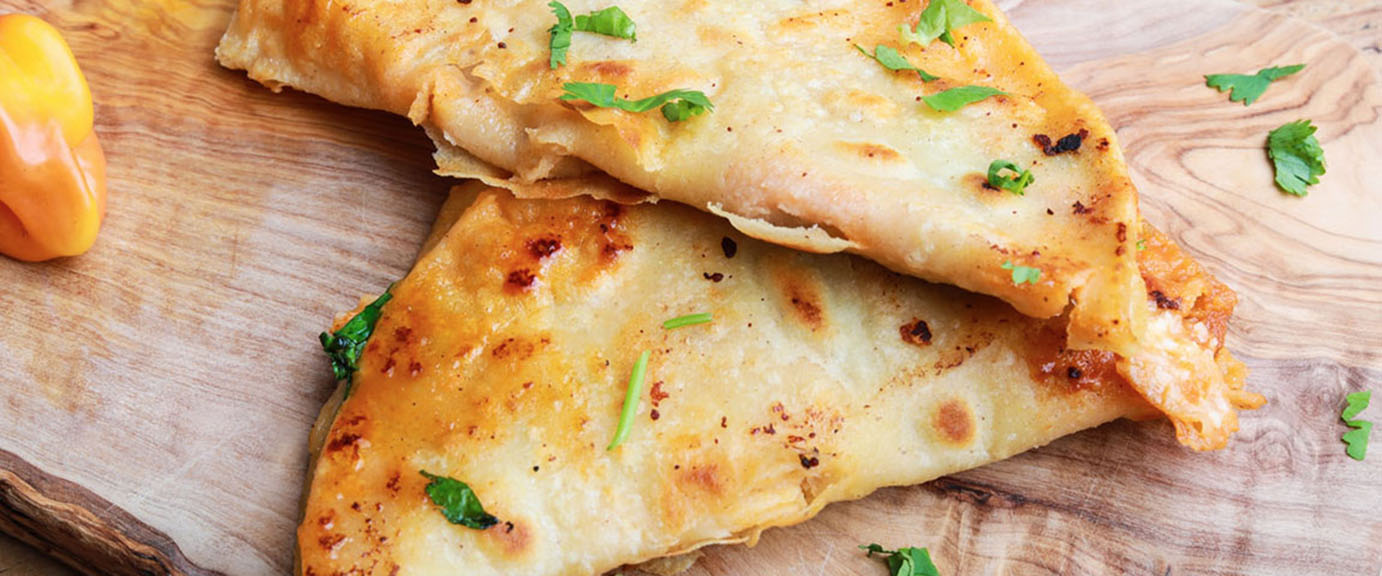
Shrimp Quesadilla
Servings: 2
Calories: 318kcal
- 5 oz raw shrimp
- 2 tbsp cilantro
- 1 tbsp lemon juice
- 1/4 tsp ground cumin
- 1/8 tsp cayenne pepper
- 2 flour tortillas, burrito size
- 2 tbsp sour cream
- 4 tsp salsa
- 2 tbsp shredded jalapeno cheddar cheese
Shell and devein shrimp. Rinse and cut into bite-size pieces. Chop cilantro.
Combine cilantro, lemon juice, cumin and cayenne pepper in a zip-lock bag to make marinade. Add shrimp pieces and set aside to marinate for 5 minutes.
Heat a skillet to medium heat and add shrimp with marinade. Stir-fry 1 to 2 minutes until shrimp turns orange. Remove skillet from heat and spoon shrimp out, leaving marinade.
Add sour cream to marinade in skillet and stir to mix.
Heat tortillas in a large skillet or microwave. Spread 2 teaspoons salsa onto each tortilla. Top with 1/2 shrimp mixture and sprinkle with 1 tablespoon cheese.
Spoon 1 tablespoon sour cream marinade mixture on top of shrimp. Fold tortilla in half, turn over in skillet to heat, then remove from pan. Repeat with second tortilla and remaining shrimp, cheese and marinade.
Cut each tortilla into 4 pieces. Garnish with cilantro and lemon wedge when ready to serve.
Serving: 4pieces | Calories: 318kcal | Carbohydrates: 26g | Protein: 20g | Fat: 15g | Cholesterol: 118mg | Sodium: 398mg | Potassium: 276mg | Fiber: 1g | Calcium: 139mg | Phosphorus: 243mg


 Labs
Labs Supplements
 Log in
 Register
 Scan Me!