Nutrition Snapshot
- Turmeric, olive oil, and black pepper in one pot make this chilled soup fit an anti-inflammatory eating pattern.
- A cup has about 500 milligrams of potassium and 3 grams of fiber for around 100 calories.
- A cup also has 279 milligrams of sodium, mostly from the added salt, and the swap below lowers it.
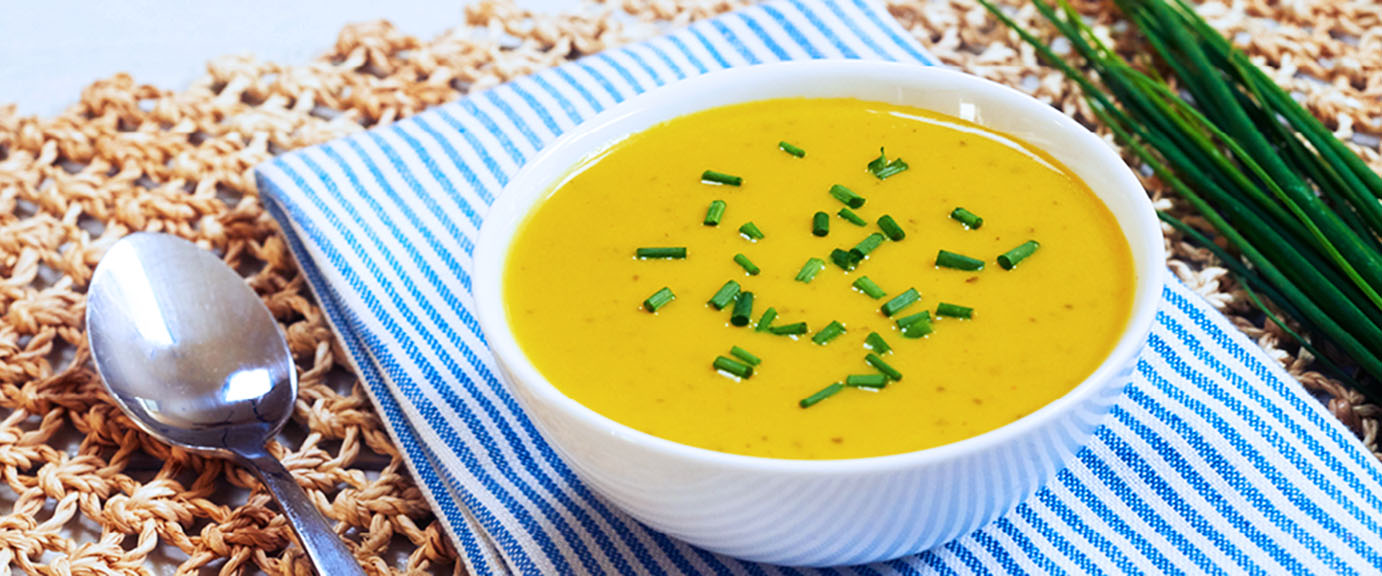
By August most gardens produce more zucchini and yellow squash than anyone planned for. This soup uses four of them in one pot. Almost all the work happens the day before: fifteen minutes of chopping, thirty-five minutes on the stove, then a long cooling and chilling stretch you spend elsewhere. The soup is cold, smooth, and pale gold from the turmeric.
Turmeric, Olive Oil, and Black Pepper Belong in the Same Bowl
Curcumin is the compound behind turmeric’s color and most of its anti-inflammatory activity. Curcumin dissolves in fat. Eaten dry, most of it passes through you. The turmeric goes in after blending, and by then the two tablespoons of olive oil are stirred through the soup, so the curcumin has fat to dissolve into.
The liver and the small intestine attach sugar molecules to curcumin and clear it quickly. The sharp compound in black pepper, piperine, slows that clearing. Pairing the two raised blood curcumin sharply in early human testing (Shoba et al., Planta Medica, 1998, PMID 9619120). A bowl of this soup holds far less turmeric than that test used. Keep the pepper in the pot anyway, since it costs nothing.
What’s in a Serving
A cup is mostly squash and broth, so the calories stay low even with the olive oil stirred through. The potassium comes from the squash, with a little from the broth. The fiber comes mostly from the squash too, with a small amount from the peas.
The Greek yogurt stirred in at the end supplies about half the protein and some of the calcium. The squash, peas, and broth make up the rest. Turmeric and pepper add almost no calories, and they are in the pot for the curcumin and the piperine. The card below lists the exact grams for each nutrient.
What to Buy
Summer Squash
Pick zucchini and crookneck squash that feel firm and heavy, with thin skin you can dent with a thumbnail. Small squash taste sweeter and hold less water. Leave the skins on. They add some fiber and most of the color, and the blender breaks them down.
Turmeric and Black Pepper
Ground turmeric loses color and aroma on the shelf, so replace a jar older than a year. Deep orange powder has more curcumin left in it than a faded one. Grind the black pepper fresh if you can. Pre-ground pepper still supplies piperine, so use what you have.
Vegetable Broth and Salt
The sodium here splits about two to one between the half teaspoon of kosher salt and the broth, with the salt the larger share. Low-sodium cartons have about 140 milligrams a cup. No-salt-added cartons have under 100. The recipe is built on the low-sodium kind. To go lower, buy no-salt-added, hold the salt back at step four, and season after the soup has chilled.
Greek Yogurt and Olive Oil
Plain nonfat Greek yogurt keeps the protein high and adds tang. It goes in after blending, off the heat, so it stays smooth. Whole milk Greek yogurt makes the soup silkier and adds more fat for the curcumin. Any extra virgin olive oil works here.
Who This Fits and Who Should Go Easy
Who It Fits
This soup suits an anti-inflammatory or heart-healthy eating pattern. It also fits anyone who wants more vegetables and no hot food in August. Eaten regularly alongside other vegetables, fish, and olive oil, it adds to that pattern.
Go Easy If
If you have a potassium limit for kidney disease, count this soup in your day. A cup supplies about 500 milligrams, which is a real share of a restricted target. A half cup alongside a sandwich fits more easily than a full bowl.
How to Make It Your Own
The soup works warm, so ladle some straight from the pot in cooler weather. A handful of spinach in the last two minutes deepens the color. Fresh mint, chives, or a squeeze of lemon at the table sharpens the flavor.
To make it a meal, stir in an extra half cup of Greek yogurt before serving, or set a hard-boiled egg beside the bowl. A few drops of hot sauce and a pinch of cumin turn it savory.
The Health Swaps in Short
- Low sodium: use no-salt-added broth, hold back the kosher salt, and season with lemon juice after chilling.
- Dairy free: replace the Greek yogurt with half a cup of full-fat coconut milk, added after blending.
- Higher protein: stir in extra Greek yogurt, or serve a cup of soup with eggs or cold shrimp.
- Nut free: the recipe is nut free as written.
Make It the Day Before
A large saucepan and a blender are the whole equipment list, and an immersion blender saves you a transfer. Fifteen minutes of chopping and thirty-five minutes on the stove are the hands-on work. The pot then has to cool to room temperature, about three quarters of an hour, before you blend it.
From there the soup needs at least six hours cold. A pot made in the evening is ready by morning. It keeps covered in the refrigerator for four days. Stir before serving, since it separates as it sits. Freezing splits the yogurt, so freeze the blended soup before the yogurt goes in. Stir the yogurt into the thawed batch.
Equipment
- Large Saucepan
- Blender
Ingredients
- 4 cups vegetable broth low sodium
- 2 zucchini medium, cut into large chunks
- 2 yellow squash medium, crookneck, cut into large chunks
- 1 onion small, peeled and quartered
- 1/2 cup green peas frozen, unseasoned
- 2 tablespoons olive oil extra virgin
- 1/2 teaspoon salt kosher
- 1/2 cup Greek yogurt plain, nonfat
- 2 teaspoons turmeric ground
- 1/4 teaspoon black pepper ground
Instructions
- Bring the broth to a boil in a large saucepan, then reduce the heat to medium.
- Add the zucchini, yellow squash, and onion.
- Return to a boil, then simmer for 25 minutes.
- Add the green peas, olive oil, and salt.
- Simmer 5 minutes more.
- Remove the pan from the heat and let the soup cool to room temperature.
- Blend until smooth, in the pan with an immersion blender or in batches in a countertop blender.
- Stir in the Greek yogurt, turmeric, and black pepper.
- Refrigerate at least 6 hours or overnight, and serve chilled.
Notes
Nutrition
A Cold Soup That Fits an Anti-Inflammatory Eating Pattern
The turmeric goes into a pot that already has olive oil stirred through it, and the black pepper goes in at the same time. Those two things make curcumin easier to absorb, though a bowl of soup holds far less turmeric than any absorption test has used. The squash supplies the potassium and most of the fiber.
A cup is a light first course, and two cups make lunch. You do fifty minutes of work the day before and eat cold soup the next day. Serve it straight from the refrigerator, in a chilled bowl.
Serve It With
A slice of whole grain toast and a hard-boiled egg turn a cup of this into a full lunch. Cold poached shrimp or leftover chicken alongside makes it dinner. For another cold side that keeps the whole meal off the stove, see Easy Cilantro Lime Coleslaw for a Low-Sodium, Heart-Healthy Side.
For more on curcumin, see Curcumin: Anti-Aging Supplement for Healthier Joints, Brain, and Heart. Anti-inflammatory nutrients and antioxidants overlap, and Antioxidant and Anti-inflammatory Nutrients: What They Are and How They Work sorts out the difference.

Scan Me!