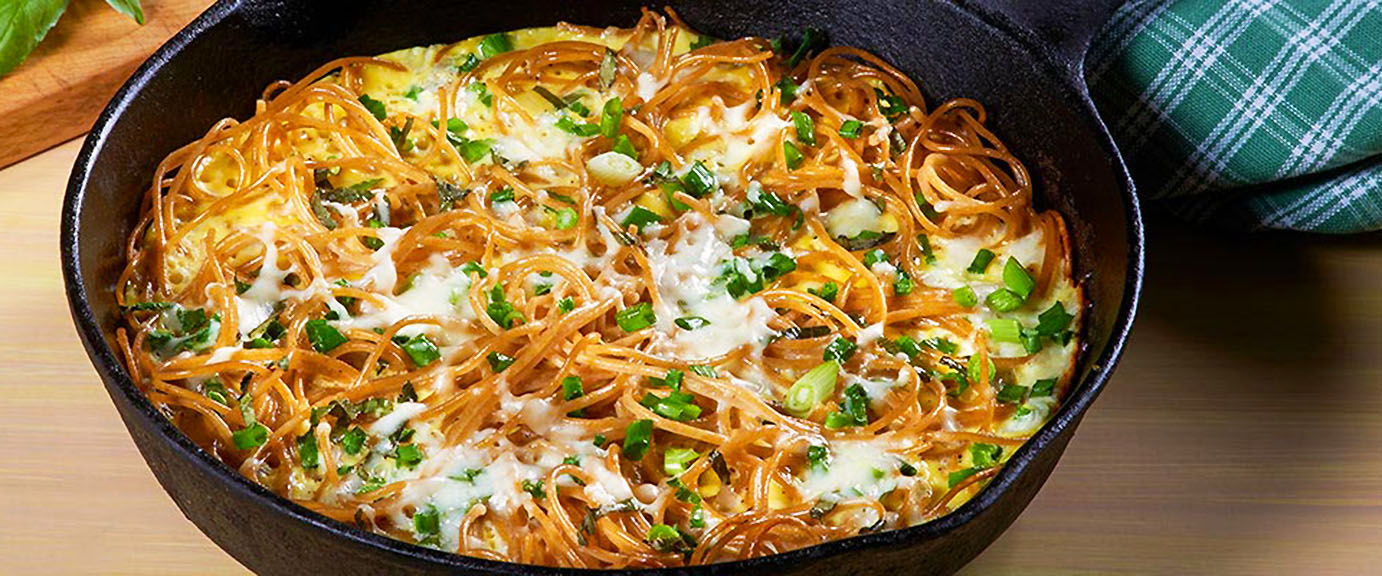
Basil Spaghetti Frittata

At a Glance

  • The whole-grain pasta and egg protein digest slowly together, so this frittata fits a blood-sugar-friendly eating pattern.
  • Each wedge brings 17 grams of protein from eggs, egg whites, and mozzarella, enough to make it a filling breakfast or lunch.
  • As written it is light on vegetables; fold in a handful of spinach, chopped peppers, or halved cherry tomatoes to round out the plate.

A frittata is the rare dish that rewards you for cooking a little extra pasta the night before. This one takes about two and a half cups of cooked whole wheat spaghetti and turns it into a skillet meal you can slice into wedges for breakfast, pack for lunch, or serve with a salad for a light dinner. It sets in one pan in roughly twenty minutes, and the basil and green onion do most of the flavor work.

Why This Frittata Keeps Your Energy Steady

Plain pasta on its own digests fairly quickly, and a big bowl of it can send your blood sugar up and then back down in a hurry. Two things in this recipe slow that down. The first is the whole wheat spaghetti, which keeps the bran and germ that white pasta loses. That means more fiber, and fiber is the part of the meal that slows how fast the starch breaks down into sugar in your gut.

The second is protein. Eggs, egg whites, milk, and mozzarella add up to 17 grams of protein per wedge, and protein slows how quickly your stomach empties into the small intestine. When a meal leaves the stomach more gradually, the sugar from the carbs enters your bloodstream more gradually too. The result is a gentler rise and a steadier stretch of energy afterward, which is why a plate that combines whole grains, protein, and a little fat tends to sit better than the carbs alone. That pairing is the core idea behind a high-fiber, protein-forward approach to steadier blood sugar.

Eggs earn their spot here for more than protein. They carry choline, which supports the liver and brain, and the yolks bring vitamin D and the eye-protective pigments lutein and zeaxanthin. This recipe uses whole eggs for that nutrition and adds two egg whites for extra protein without much added fat.

What Goes Into It, and What to Buy

The ingredient list is short, so a few smart choices at the store make a real difference.

Whole wheat spaghetti. Look for “whole wheat” or “whole grain” as the first word on the ingredient line, not “enriched” or “multigrain,” which can still be mostly refined flour. Any leftover cooked spaghetti works, and this is a good way to use up a portion from an earlier meal. If the noodles are cold and clumped, run warm water over them and toss so they separate before they hit the pan.

Eggs and egg whites. Large eggs are the standard the nutrition numbers are built on. If you keep a carton of liquid egg whites in the fridge, two tablespoons stands in for each white and saves you separating eggs.

Mozzarella. Two ounces of shredded mozzarella melts into the top and adds a mild, milky flavor. A low-moisture block you shred yourself melts more evenly than pre-shredded, which is dusted with starch to keep it from clumping. For a sharper taste with less cheese, a spoonful of grated Parmesan does a lot of work.

Basil and green onion. Fresh basil is worth it here; dried basil turns muddy and loses the bright note the dish leans on. Stir most of the basil in and save a little to scatter on top after cooking so it stays green. Green onion gives a mild bite without the sharpness of a raw yellow onion.

How to Make It Your Own

The base recipe is a starting point. A few changes let it fit more meals and more eating patterns.

Add vegetables. This is the easiest upgrade. A couple of handfuls of baby spinach wilted into the pasta, a diced tomato, or chopped bell pepper and mushrooms all fold in without changing the method. More vegetables mean more fiber and a more filling wedge for about the same calories.

Lower the carbs. Cut the spaghetti to one and a half cups and add an extra egg or a handful of vegetables to make up the volume. You can also use a lentil or chickpea pasta, which raises the protein and fiber further.

Make it dairy-free. Swap the milk for unsweetened soy or pea milk, which keep some protein, and either skip the cheese or use a dairy-free shred that melts.

Season it without much salt. This frittata is naturally low in sodium, which is a plus for a heart-healthy pattern but can taste flat if you are used to saltier eggs. Lean on the basil and green onion, be generous with black pepper, and try a squeeze of lemon or a little grated Parmesan for savory depth before you reach for the salt shaker. Add salt to taste if your eating pattern allows.

Storing, Making Ahead, and Serving

Frittata keeps well, which makes it a strong make-ahead option. Once it cools, wrap the wedges or store them in a covered container in the fridge for up to four days. Reheat a wedge in a covered skillet over low heat or in the microwave in short bursts so the eggs stay tender rather than rubbery. It is also good cold, straight from the container, which makes it an easy packed lunch.

You can cook the whole frittata a day ahead and slice it as you go through the week. For serving, a wedge alongside a green salad and a piece of fruit makes a balanced plate for any time of day. It also pairs well with a bowl of berries at breakfast or a cup of tomato soup at lunch.

RECIPE CARD RENDERS HERE (WP Recipe Maker shortcode)

Slice it warm, scatter the reserved basil over the top, and serve wedges with a green salad or a bowl of berries for a plate that holds you until the next meal.

Course Breakfast, lunch, Main Course
Servings 4
Calories 271kcal

Ingredients

  • 1/3 cup green onion
  • 2 tbsp fresh basil 
  • 2 1/2 cups whole wheat spaghetti, cooked
  • 1/3 cup 1% low fat milk
  • 4 large eggs
  • 2 large egg whites
  • 1/4 tsp black pepper
  • 2 oz mozzarella cheese

Instructions

  • Chop green onion and basil; set aside.
  • Coat a medium non-stick skillet with 2 teaspoons olive oil. Spread cooked spaghetti noodles evenly in skillet and cook over medium heat for 2 minutes.
  • Whisk milk, eggs, egg whites and black pepper together in a bowl. Gently pour over pasta. Sprinkle the top of the frittata with cheese, green onions and basil. Cover and cook for approximately 8 minutes until set.
  • Cut the frittata into 4 wedges and serve.

Nutrition

Serving: 1wedge | Calories: 271kcal | Carbohydrates: 26g | Protein: 17g | Fat: 11g | Sodium: 208mg | Potassium: 212mg | Fiber: 3g | Calcium: 178mg | Phosphorus: 279mg
About the Author

NutriScape Downloads Staff

Tags:

Related Posts

One comment on “Basil Spaghetti Frittata

Comments are closed.