Tag: salad

Easy Cilantro Lime Coleslaw for a Low-Sodium, Heart-Healthy Side

Easy Cilantro Lime Coleslaw for a Low-Sodium, Heart-Healthy Side

Nutrition Snapshot

  • Skipping the creamy dressing for lime and warm spices keeps this slaw very low in sodium and heart-healthy.
  • It is naturally gluten free, dairy free, and low in carbohydrate, which also suits steady blood sugar and plant-based eating.
  • A serving is light on protein and fiber, roughly a gram of each, so pair it with a protein or beans to make a meal.

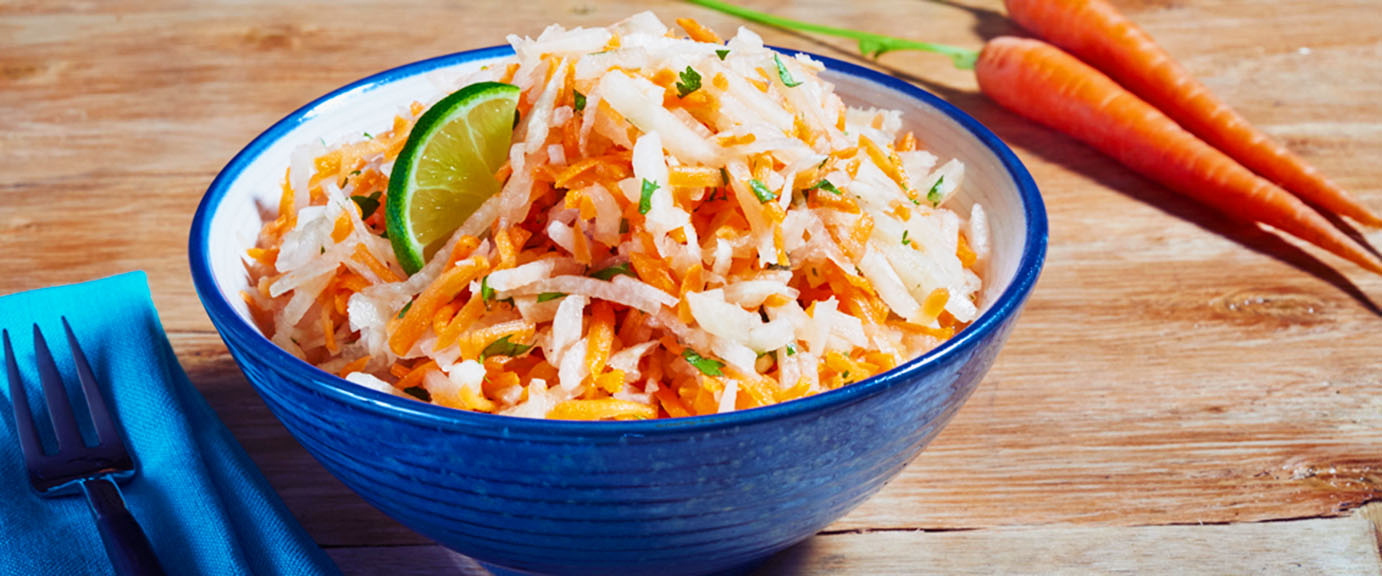
Deli coleslaw usually arrives heavy with mayonnaise and salt. This version takes a different route. A splash of olive oil and fresh lime juice coats the cabbage. Cumin, chili powder, and cilantro carry the flavor, so the slaw tastes bright and fresh rather than rich and salty. It comes together in one bowl with no cooking, an easy side for a weeknight dinner or a potluck.

Skipping the Mayo Keeps This Slaw Low in Sodium and Heart-Healthy

Blood pressure rises when there is too much sodium and too little potassium in the body. The two minerals balance each other, so less sodium and more potassium ease the pressure inside your arteries. A creamy slaw leans on salt and mayonnaise for flavor. This one adds no salt, and it carries potassium from the cabbage and red pepper.

The olive oil helps too. It brings unsaturated fat, the kind that fits a heart-healthy pattern, in place of the saturated fat in a creamy dressing. For where potassium fits in the bigger picture, see Potassium: Understanding This Major Mineral and Its Impact on Health.

What’s in a Serving

Most of what a serving gives you comes from the vegetables. The cabbage and red pepper bring fiber and vitamin C, along with a little potassium, calcium, and phosphorus. The olive oil adds unsaturated fat and helps your body take in the fat-soluble vitamins in the vegetables. There is very little sodium, since the recipe adds none and the vegetables carry almost none on their own.

The recipe card below shows the exact grams for each nutrient in a serving, so there is no need to count them here. For how the fiber in a dish like this supports your heart, your gut, and steady weight, see Fiber 101: Gut Health, Weight Management, Cholesterol, and More.

Ingredient Spotlights

Coleslaw Mix

A bag of coleslaw mix is shredded cabbage with a little carrot, ready to use. Green cabbage, red cabbage, or a three-color mix all work. Cabbage is a cruciferous vegetable, the same family as broccoli and kale, and it brings fiber and vitamin C for very few calories. Pick a bag that looks crisp and dry, and use it within a day or two for the best crunch.

Fresh Cilantro

Cilantro is what gives this slaw its fresh, citrusy flavor. Buy a bunch with bright green leaves and no yellow or slimy spots. Store it stems-down in a jar of water in the refrigerator, loosely covered, and it keeps for several days. Some people taste cilantro as soapy, a difference set by genetics; flat-leaf parsley is a mild swap that keeps the color.

Red Bell Pepper

Red bell pepper adds color, a little sweetness, and a good amount of vitamin C. Slice it thin so it mixes evenly through the cabbage. A red pepper is a green pepper left to ripen, which is why it tastes sweeter and carries more vitamin C. For more on that nutrient, see A Guide to Vitamin C: An Essential Immunity Booster.

Olive Oil and Lime Juice

Olive oil and fresh lime juice make the dressing, with no mayonnaise and no added sugar. The lime brings the bright acid that a slaw needs, and fresh juice tastes far better here than bottled. A good extra virgin olive oil adds a little richness and unsaturated fat. Whisk the two together with the spices, and use just enough to coat the cabbage in a light film.

Cumin and Chili Powder

Cumin and chili powder give the slaw its warm, gently smoky flavor, and they season it without any salt. For the fullest flavor, toast the cumin in a dry pan for a minute until it smells fragrant. Chili powder is usually mild, so add more if you like heat, or a pinch of cayenne for a sharper kick.

Who This Slaw Fits and Who Should Watch the Portion

Who It Fits

This slaw suits anyone eating for heart health, steady blood sugar, or simply more vegetables on the plate. It is gluten free, dairy free, and plant-based as written, so it works for a wide range of eaters. Because it adds no salt, season at the table with more lime, cumin, or a little black pepper rather than the salt shaker.

Go Easy If

The main thing to watch is protein, since this slaw has very little on its own. It works best as a side next to a protein rather than as the main dish. Black beans, grilled chicken, or shrimp turn it into a light main. For the bigger picture on blood pressure, see Beyond Low Sodium and Weight Loss: Which Supplements Can Bring Blood Pressure Down.

How to Make It Your Own

The lime-and-cumin base takes well to add-ons. Diced avocado adds creaminess and healthy fat. A minced jalapeno or a pinch of cayenne brings more heat. A handful of black beans and some corn turns the slaw into a Southwest salad. It also makes a fresh topping for fish tacos, grilled chicken, or black bean tacos, in place of a heavy sauce.

The health swaps, in short:

  • Lower sodium: this slaw already adds no salt, so it is low in sodium as written; keep it that way by seasoning with lime, cumin, chili, and cilantro instead of salt.
  • Lower sugar: there is no added sugar in this recipe, so there is nothing to cut.
  • Dairy free: the base recipe is already dairy free, with no cheese or creamy dressing.
  • Nut free: the recipe is nut free as written; the optional sesame seed garnish is a common allergen, so leave it off if sesame is a concern.

Make It Ahead and Keep It Crisp

This slaw is made for getting ahead. You can chop the cabbage, pepper, and cilantro and whisk the dressing a day early, then keep them separate in the refrigerator. Toss them together up to a few hours before serving so the cabbage stays crisp.

Once dressed, the slaw keeps two to three days covered in the refrigerator. The lime and spices deepen as it sits, though the cabbage softens over time. If you like more crunch on day two, add a handful of fresh coleslaw mix before serving.

Easy Cilantro Lime Coleslaw

Print Recipe
No ratings yet

Easy Cilantro Coleslaw

A crisp, no-mayo cilantro coleslaw dressed with olive oil, fresh lime, cumin, and chili powder. Naturally low in sodium, for an easy side that fits a heart-healthy plate.
Prep Time15 minutes
Cook Time0 minutes
Total Time15 minutes
Course: Side Dish
Cuisine: Mexican
Keyword: heart healthy, low sodium
Servings: 6
Calories: 65kcal

Ingredients

  • 4 cups coleslaw mix
  • 1/2 cup fresh cilantro chopped
  • 1/4 cup red bell pepper thinly sliced
  • 2 tbsp olive oil
  • 1/4 cup fresh lime juice
  • 1 tsp ground cumin
  • 1/2 tsp chili powder
  • Chives and sesame seeds, for garnish (optional)

Instructions

  • Chop cilantro. Finely slice bell pepper.
  • In a large bowl, toss the coleslaw mix, cilantro, and red pepper together.
  • In a small bowl, whisk the olive oil, lime juice, cumin, and chili powder.
  • Pour the dressing over the slaw and toss until evenly coated.
  • Serve, garnished with chives and sesame seeds if you like.

Notes

  • Lower sodium: this recipe adds no salt, so it is already low in sodium; keep it that way by seasoning with lime, cumin, chili, and cilantro rather than salt.
  • Lower sugar: no added sugar in this recipe, so there is nothing to cut (no allulose or monk fruit swap needed).
  • Dairy-free and nut-free as written. The optional sesame seed garnish is a common allergen; leave it off if sesame is a concern.
  • Make-ahead and storage: chop the vegetables and whisk the dressing a day ahead and keep them separate; toss within a few hours of serving for the most crunch. Once dressed, the slaw keeps two to three days covered in the refrigerator, though the cabbage softens as it sits.

Nutrition

Calories: 65kcal | Carbohydrates: 5g | Protein: 1g | Fat: 0g | Sodium: 14mg | Potassium: 167mg | Fiber: 1g | Calcium: 26mg | Phosphorus: 18mg

A No-Mayo Slaw That Fits a Heart-Healthy Plate

This cilantro lime coleslaw gets its flavor from acid and spice instead of salt and mayonnaise. A serving stays very low in sodium, with potassium and vitamin C from the vegetables and unsaturated fat from the olive oil.

It is light on protein, so it works as a side rather than a whole meal. Keep the portion to about a cup, add a protein, and it fits a heart-healthy dinner.

Serve It With

This slaw rounds out almost any simple main. Pile it next to grilled chicken, baked salmon, or a black bean bowl, or spoon it onto fish tacos in place of a creamy sauce. A scoop of brown rice and beans alongside turns it into an easy plant-based plate.

For more on eating to protect your heart, see Heart-Smart: The Must-Know Supplements for High Cardiovascular Risk. To understand why the fiber here helps, see Fiber 101: Gut Health, Weight Management, Cholesterol, and More.


Celery Seed Dressing

Nutrition Snapshot

  • No salt goes into this dressing, which puts it far under the sodium in almost any bottled version.
  • Oil, vinegar, and seasoning are naturally low in potassium and phosphorus, so this fits a kidney eating plan.
  • The sweet tangy flavor comes from real added sugar, so use the allulose swap in the notes.

Two tablespoons of bottled dressing can hold more sodium than a one ounce bag of chips, and it goes on vegetables that had almost none. The versions labeled light often add sugar to make up for the fat they left out.

This one takes five minutes of work in a jar, plus half an hour in the refrigerator while the celery seed and onion flavor the oil. Olive oil, vinegar, a little sugar, grated onion, celery seed, dry mustard, and black pepper give you the sweet tangy flavor of the classic dressing without any added salt.

Most Bottled Dressings Carry More Sodium Than the Salad Under Them

Sodium and Fluid Move Together

When the kidneys are working with less capacity, they clear less sodium from the blood, and the body retains more water with it. That shows up as swollen ankles, a higher reading on the top number of a blood pressure cuff, and shortness of breath.

A salad is an easy place to take sodium out, because almost all of it comes from the dressing. The vegetables underneath have very little.

Phosphate Additives on the Label

Some bottled dressings carry added phosphates, which show up on the label as ingredients with phos in the name. Added phosphate is absorbed far more completely than the phosphorus that occurs naturally in food. That is why the ingredient list matters as much as the nutrition panel when you are choosing a dressing on a kidney eating plan. A dressing you shake at home has none of it.

Potassium Salt Substitutes

Some low sodium dressings replace salt with potassium chloride. That lowers the sodium, and for most people the extra potassium is helpful.

It is the wrong trade for anyone with reduced kidney function or anyone on a potassium restriction. The same goes for anyone taking a potassium raising blood pressure medication, such as an ACE inhibitor, an ARB, or a potassium sparing diuretic. This dressing gets its flavor from vinegar, onion, and celery seed instead.

What’s in a Serving

A serving is mostly olive oil, which is where the calories and the monounsaturated fat come from. The added sugar works out to about three quarters of a teaspoon per serving, since two tablespoons are spread across the whole jar.

Sodium comes only from what occurs naturally in the vinegar and the onion, which is close to nothing. Potassium and phosphorus stay low for the same reason: there is no dairy, no cheese, no bouillon, and no phosphate additive. The recipe card below shows the calculated figures for a two tablespoon serving.

Celery Seed and Grated Onion Replace the Salt

Celery Seed

Celery seed comes from a wild relative of the celery in the produce aisle, and it tastes like celery concentrated down to a sharp, slightly bitter edge. One teaspoon flavors the whole jar. Buy it whole rather than ground, since the whole seed holds its aroma for a year or more in a closed container.

Celery salt is a different product. It is celery seed blended with fine salt, and using it here would add back the salt the recipe leaves out.

The Oil

Extra virgin olive oil gives the dressing its body and a peppery finish. A milder oil such as avocado oil works if you want the celery seed to come forward. Olive oil turns cloudy and thick in the refrigerator. That is normal. Ten minutes on the counter and it pours again.

The Dry Mustard

A teaspoon of ground dry mustard does two things here. It adds a faint heat behind the sweetness, and it holds the oil and vinegar together a little longer between shakes. That is the same reason the Dijon swap below makes the dressing creamier still.

The Vinegar

Apple cider vinegar has a little fruit sweetness that suits this dressing. White wine vinegar and plain white vinegar both work. Rice vinegar is milder, so add an extra teaspoon if you use it.

The Onion

Grate the onion rather than chopping it. Grating breaks the cells open and releases the juice. That juice spreads onion flavor through the whole jar of oil. Chopped onion settles at the bottom in crunchy pieces instead. A yellow or sweet onion tastes milder here than a red one.

Who This Fits, and Who Keeps the Portion Small

This dressing suits anyone told to bring sodium down, including people managing kidney disease, high blood pressure, or heart failure. The low potassium and low phosphorus make it a fit for a kidney eating plan specifically, where the sodium and the phosphate additives in bottled dressings are the usual problem.

Go easy if you are watching added sugar closely. Three quarters of a teaspoon a serving is small, and it adds up if you dress a salad heavily or eat salad twice a day. The allulose version below has no added sugar at all.

How to Make It Your Own

The base is a jar of oil, vinegar, and seasoning, so it takes changes well. Fresh dill or parsley, a clove of grated garlic, or a spoon of Dijon all fit without changing the method. A teaspoon of poppy seed alongside the celery seed gives you the classic sweet and sour dressing served over spinach and strawberries.

Swaps Recap

  • Lower sodium: the recipe has no added salt as written. Skip any salt substitute, since most of them are potassium based.
  • Lower sugar: use allulose in place of the sugar, measure for measure, since it dissolves much like sugar does. A monk fruit blend works too, following the package to match two tablespoons of sugar.
  • Dairy free: the recipe is dairy free as written.
  • Nut free: the recipe is nut free as written.
  • Creamier: whisk in a tablespoon of Dijon mustard, which holds the oil and vinegar together longer between shakes.

Storage and Make-Ahead

The dressing keeps two weeks in a covered jar in the refrigerator. The flavor is better on day two, once the onion and celery seed have moved into the oil. Shake it hard before every pour, because oil and vinegar separate as the jar stands.

Double the batch in a quart jar with a tight lid, so there is room to shake it hard. Set the jar on the counter for ten minutes before dinner so the olive oil loosens, then shake and pour.

Print Recipe
No ratings yet

Celery Seed Dressing

A sweet and tangy shake-in-a-jar dressing built on olive oil, cider vinegar, grated onion, and celery seed, with no salt added. Low in sodium, potassium, and phosphorus for a kidney eating plan.
Prep Time5 minutes
Total Time5 minutes
Course: Salad
Keyword: celery seed dressing, homemade vinaigrette, kidney friendly dressing, low sodium salad dressing, no salt dressing
Servings: 8 servings
Calories: 134kcal

Equipment

  • Glass Jar With Lid
  • Box Grater
  • Measuring Spoons

Ingredients

  • 1/2 cup olive oil extra virgin
  • 1/4 cup apple cider vinegar
  • 2 tablespoons sugar granulated
  • 1 tablespoon onion yellow, finely grated
  • 1 teaspoon celery seed whole
  • 1 teaspoon mustard ground dry
  • 1/4 teaspoon black pepper ground

Instructions

  • Grate the onion on the fine side of a box grater into a small bowl.
  • Put the sugar into a pint jar.
  • Add the celery seed, ground mustard, and black pepper to the jar.
  • Pour the vinegar into the jar.
  • Screw the lid on and shake for 15 seconds, until the sugar dissolves.
  • Add the grated onion and any juice left in the bowl.
  • Pour in the olive oil.
  • Shake hard for 30 seconds, until the dressing looks cloudy and slightly thickened.
  • Taste the dressing and shake in another teaspoon of vinegar if the flavor is flat.
  • Refrigerate the jar for 30 minutes so the celery seed and onion flavor the oil.
  • Shake the jar again right before pouring, since the oil and vinegar separate as it stands.

Notes

Serving size: about 2 tablespoons. The recipe makes about 1 cup, or 8 servings.
Passive time: the jar rests 30 minutes in the refrigerator so the celery seed and onion flavor the oil. That time sits outside the total time shown.
Salt: there is no added salt in this recipe, and it does not need any. Skip salt substitutes as well, since most of them are potassium chloride and are a problem on a potassium restriction.
Celery seed: buy whole celery seed rather than celery salt. Celery salt is celery seed blended with fine salt and would add back the salt the recipe leaves out. Whole seed holds its aroma for a year or more in a closed container.
Onion: grate the onion rather than chopping it. Grating releases the juice, which spreads onion flavor through the oil instead of leaving crunchy pieces at the bottom of the jar.
Lower sugar: use allulose in place of the granulated sugar, measure for measure, since it dissolves much like sugar does. A monk fruit blend also works, following the package to match 2 tablespoons of sugar.
Creamier: whisk in 1 tablespoon of Dijon mustard, which holds the oil and vinegar together longer between shakes.
Variations: add 1 teaspoon of poppy seed alongside the celery seed for a sweet and sour dressing over spinach and strawberries. Fresh dill, parsley, or a clove of grated garlic all work.
Dairy free and nut free as written.
Oil: olive oil turns cloudy and thick in the refrigerator. That is normal. Set the jar on the counter for 10 minutes and it pours again.
Storage: keeps 2 weeks in a covered jar in the refrigerator. The flavor is better on day two.
Make-ahead: double the batch in a quart jar with a tight lid, so there is room to shake it hard, then shake and pour at dinner.

Nutrition

Calories: 134kcal | Carbohydrates: 3g | Protein: 0.1g | Fat: 14g | Saturated Fat: 2g | Sodium: 8mg | Potassium: 13mg | Fiber: 0.1g | Sugar: 3g | Calcium: 6mg | Iron: 0.2mg | Magnesium: 2mg | Phosphorus: 3mg | Choline: 0.3mg

A Jar of Celery Seed Dressing Keeps a Salad Kidney Friendly

Salad is one of the easiest things to eat more of, and the dressing is usually what disqualifies it on a kidney eating plan. This version takes five minutes and costs pennies a serving. It has no added salt, no phosphate additive, and no potassium chloride. Keep the pour to about two tablespoons and the sugar stays small.

Serve It With

This dressing is at its best on crisp greens with cucumber, radish, and shredded carrot. Toss it with shredded cabbage for a quick slaw, or spoon it over cold cooked green beans. A few ounces of grilled chicken turn that salad into dinner.

For another side that skips the mayonnaise, see Easy Cilantro Lime Coleslaw for a Low-Sodium, Heart-Healthy Side. When you want something creamy on the greens, the Creamy Coconut Curry Dressing works the same way in a jar. Read its ingredient list for salt first if you are counting sodium closely.